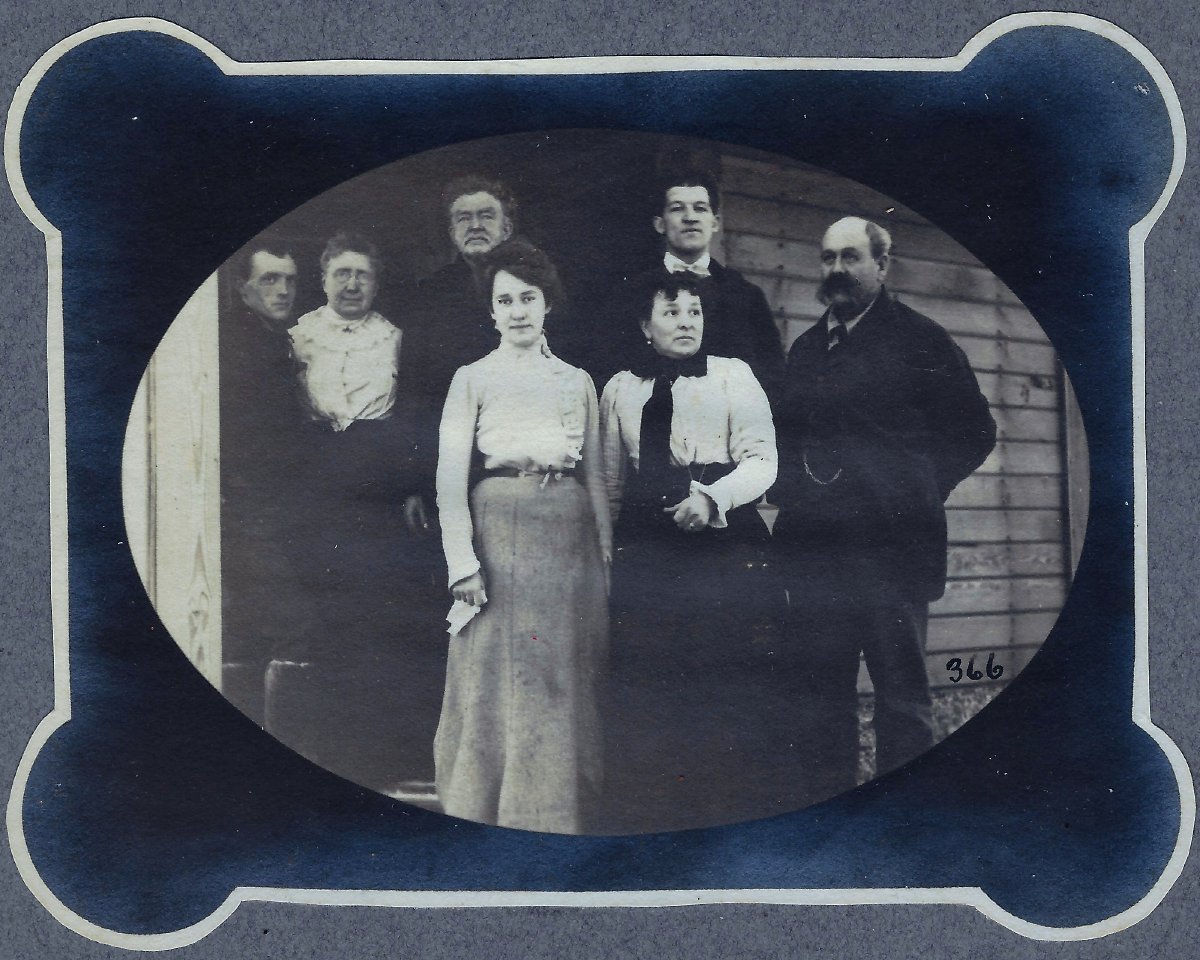
This 1901 photo captures a Thanksgiving Day group gathered at the home of William and Mary Jane Monroe in Nome, Alaska, where William - Monrovia's main founder - worked to build a railroad. Mary Jane and other family members joined him for several years. The photo comes from an album documenting the Monroe family's time in Alaska before their move to Monrovia. From the Monrovia Historical Museum collection. See full details here.
A Moment in Monrovia History: Inside the National Bank of Monrovia, 1910
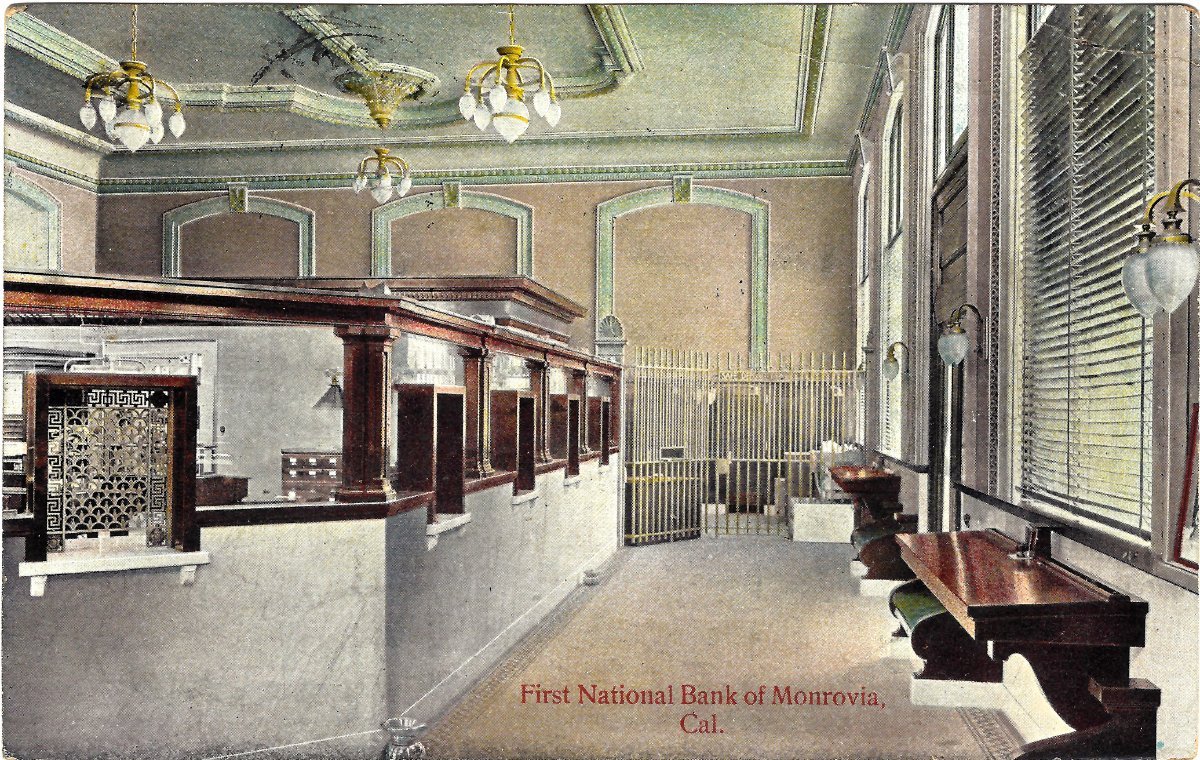
This 1910 postcard shows the interior of the National Bank of Monrovia. It was mailed to a Mr. Willie Boyar of Los Angeles, postmarked August 13, 1910 from Monrovia, with a note from a sender named Lina. From the Steve Baker collection. See full details here.
A Moment in Monrovia History: A Bird's-Eye View from the Southeast, c. 1903-1906
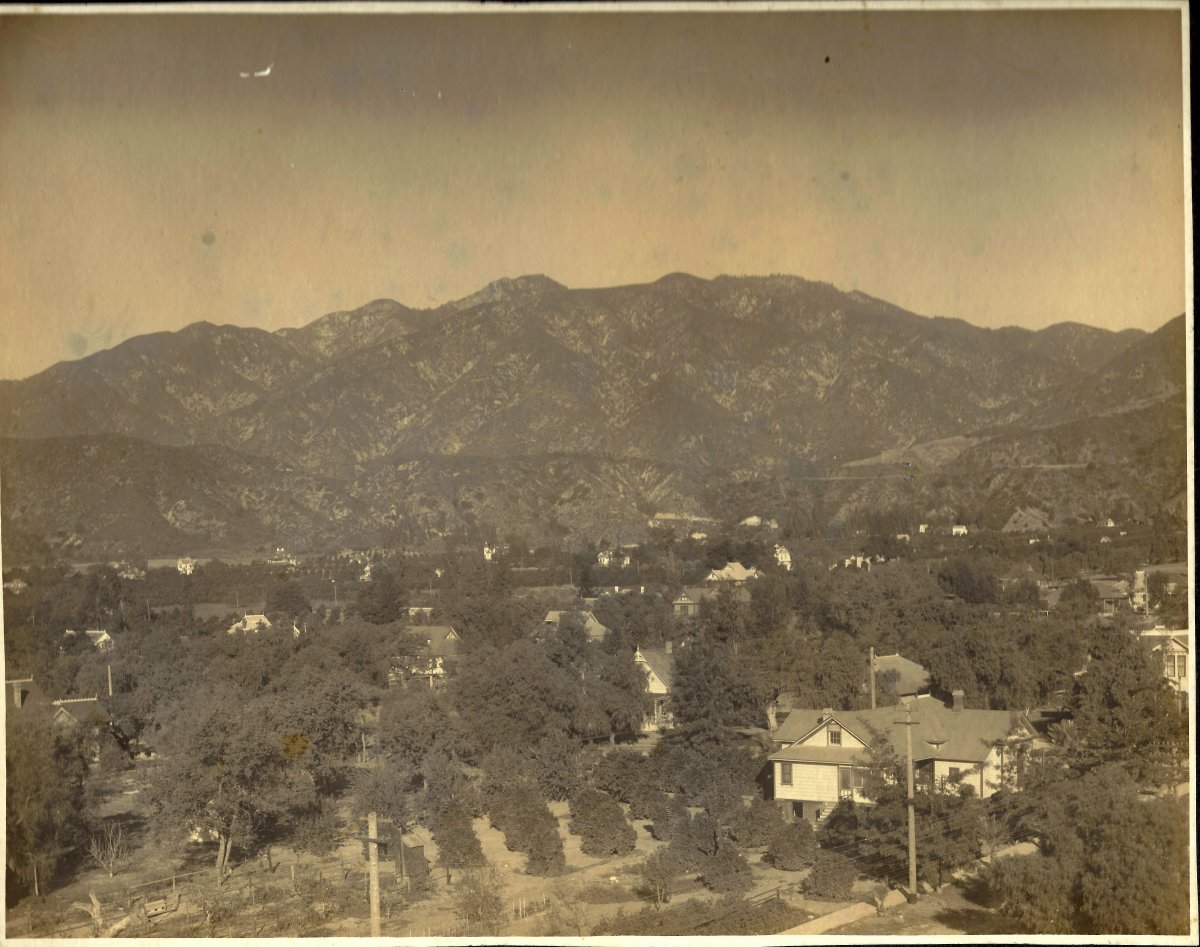
This view of Monrovia from the southeast, taken between 1903 and 1906, captures a number of the town's early homes, including the J.I. Case and Studebaker houses along Banana Avenue (now Hillcrest) and Mills View. The home in the foreground may be part of the Spence property on Myrtle Avenue, near an orange orchard shown on an 1904 map of the area. From the Myron Hotchkiss collection. See full details here.
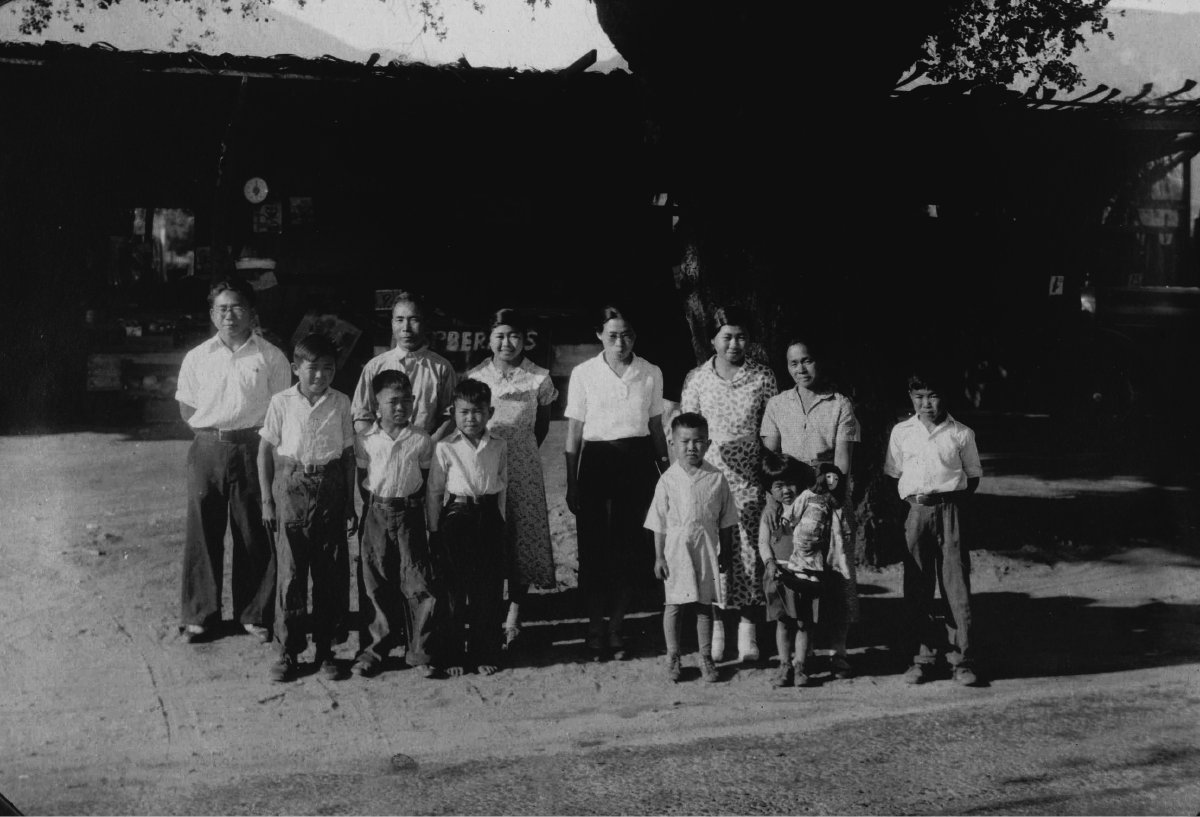
A Moment in Monrovia History: The Tsuneishi Family's Roadside Stand on Route 66
The large Tsuneishi family (after whom Monrovia's new Tsuneishi Park is named) at their roadside fruit stand along Huntington Drive, or Route 66. The eleven children pictured went on to remarkable lives - several served in World War II or the Korean War, two became pastors, one a bacteriologist, one a school teacher, and two ran the family's Tsuneishi Insurance business in Torrance, which continues today. From the Susie Ling collection. See full details here.
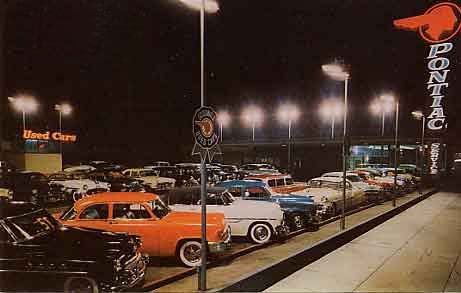
A Moment in Monrovia History: A Used Pontiac Car Dealership on Huntington Drive
This photo, from around 1960, shows a new and used Pontiac car dealership on Huntington Drive. From the Dick Singer collection. See full details here.
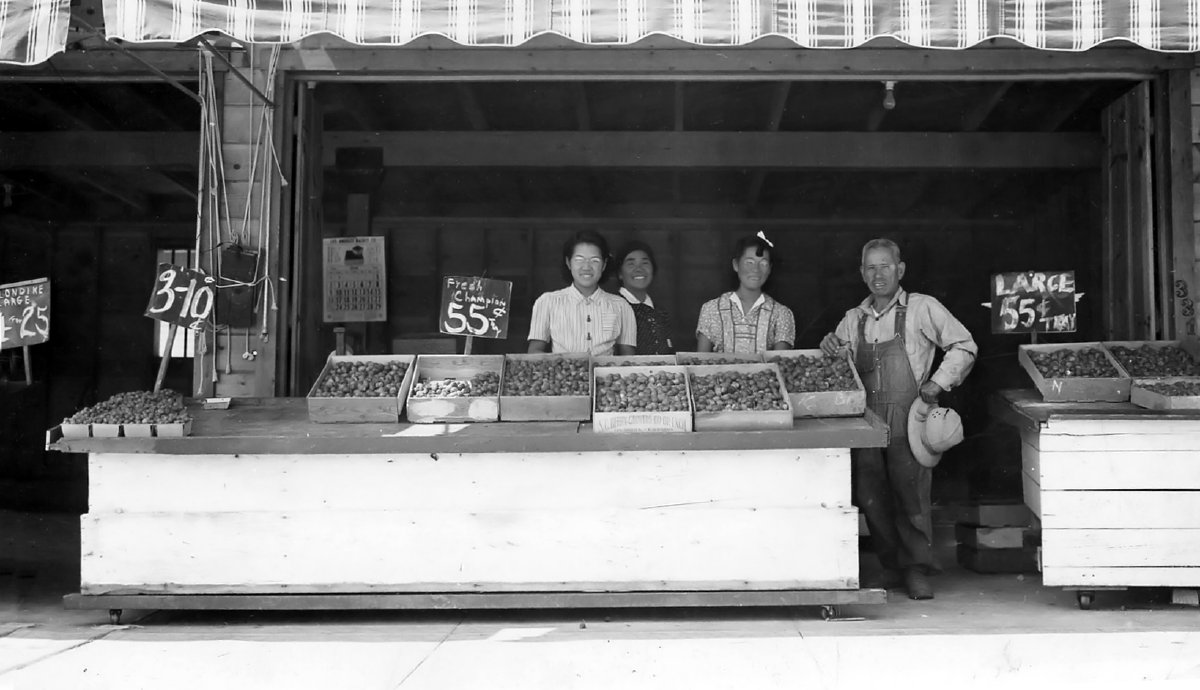
A Moment in Monrovia History: The Uyeda Family's Fruit Stand on Route 66
In 1939, the Uyeda family - Yoshiko, mother Naka, Mary and father Yutaro - sold flats of strawberries and other fruit at 331 W. Huntington Drive (just a bit west of Magnolia), along a stretch of Route 66 busy with traffic between Los Angeles and Riverside/Palm Springs. When the family was forced into internment during World War II, their friend Orman Good looked after their property. From the Susie Ling collection. See full details here.
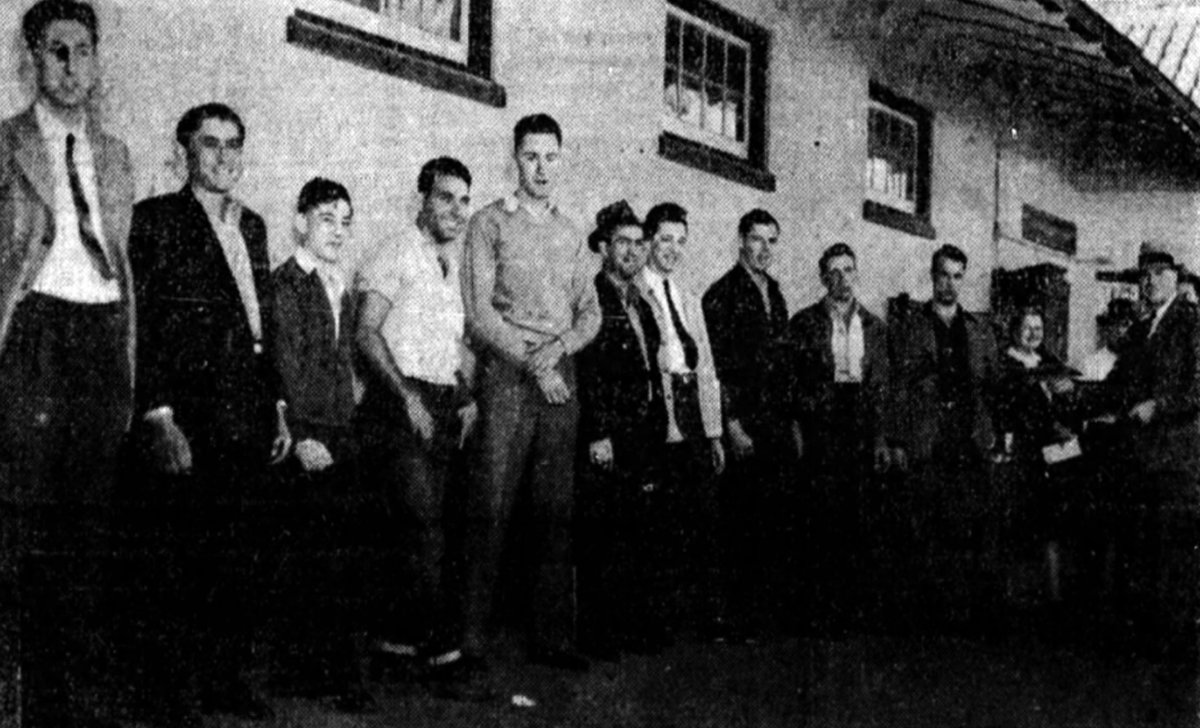
A Moment in Monrovia History: Just before WWII, draft call at the Red Car Depot
On November 7, 1941, ten Monrovia draftees — Carl Huber, Raymond Baes, Lawrence Mishima, Johnny Grippi, Jules Woehler, Clarence Nestell, Earl Morrow, Albert Walker, Max Bradbury and Robert Lieben — lined up for a newspaper photo in front of the Red Car depot at Myrtle and Olive Avenues, with draft board secretary James W. Hudson at the far right. The call-up came exactly one month before the attack on Pearl Harbor pulled the United States into World War II. From the Dick Singer collection. See full details here.
A Moment in Monrovia History: The Woman's Club House on Myrtle & Palm
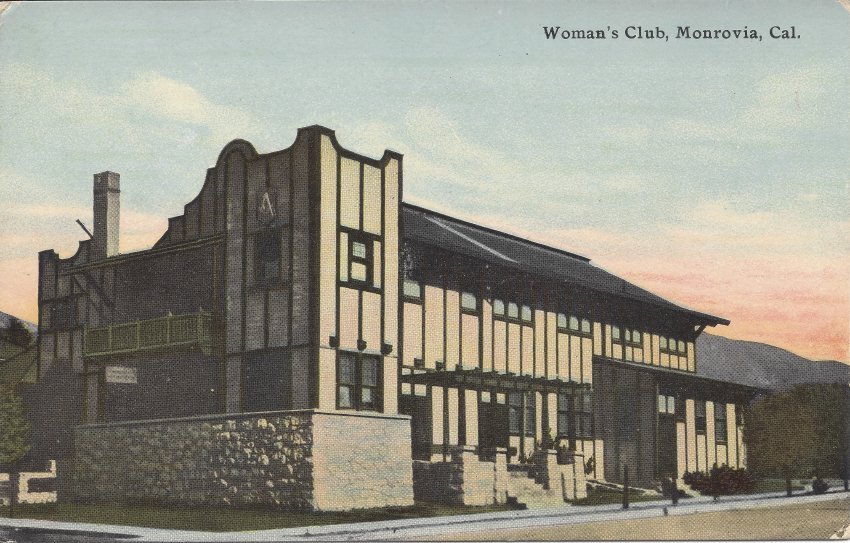
This 1930 postcard shows the Woman's Club House, which once stood on the northeast corner of Myrtle and Palm Avenues, where the Bank of America is now. The back of the card carries a handwritten note to Hazel Bird about seeing the homes of Hollywood stars, postmarked 1930. From the Kim Anderson collection. See full details here.
A Moment in Monrovia History: William Monroe's Home in faraway Nome, Alaska
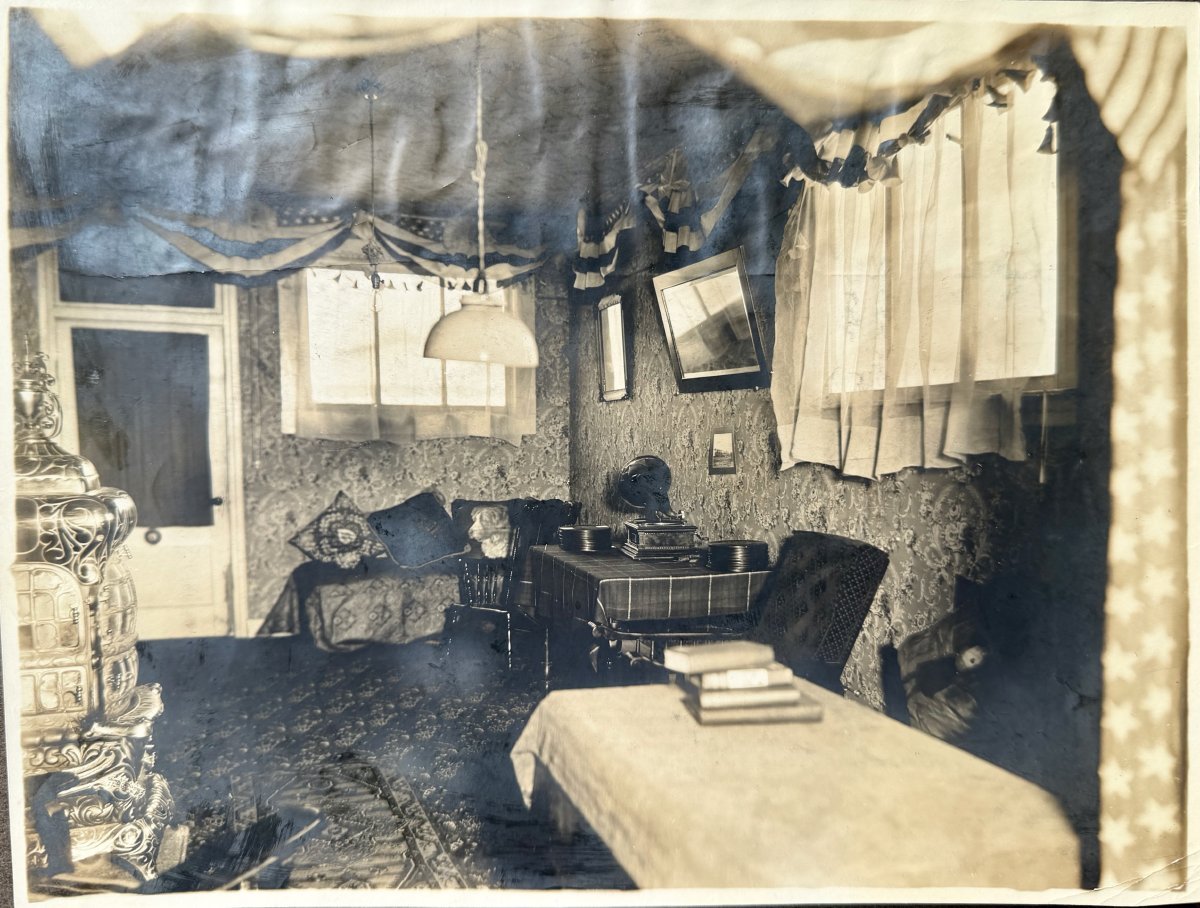
This photo captures William Monroe's home in Nome, Alaska, featuring a phonograph and a fancy stove - furnishings that would later appear in the home of his daughter Mabelle Monroe Dyer and her husband Bruce Dyer. Monroe helped build a railway in Alaska. From the Monrovia Historical Museum collection. See full details here.
A Moment in Monrovia History: Westbound Amtrak in Monrovia
A Moment in Monrovia History: Interior of Monrovia City Bakery in 1911
Interior of Fork's Bakery. H.E. Fork also was the proprietor of the Monrovia Dairy. In the 1911 City Directory, The Monrovia City Bakery, run by Harry E. Fork at 610 S Myrtle. He resided at 123 W. Walnut Avenue. The dairy was no longer listed as a business in 1911. From the Myron Hotchkiss collection. See full details here.
A Moment in Monrovia History: W.A. Crandall & Co. Carriage and Agricultural Implements
620 S Myrtle. W.A. Crandall & Co. Carriage and Agricultural Implements. Harness, Robes & Whips. Caption: "Hardware Store near present site of Fred G. Ainley's office", whose son designed the present Monrovia Fire Station. "Mr. A. CRANDALL W.A. Crandall, the jeweler, recently from Iowa, has opened a store in the Badeau block on Myrtle avenue. One side of the store is devoted to jewelry, a fine stock, including watches and clocks, being displayed. Mr. Crandall is a practical jeweler and is prepared to repair watches, clocks and jewelry in a superior style. The other side of the store is stocked with hardware and tinware and a plumbing department is also connected with the establishment. Mr. Crandall employs a skilled plumber and also a tinsmith and guarantees prompt and satisfactory work in these lines. The enterprise is a benefit to Monrovia, something that was needed. The public are invited to call and see his lines of goods." Monrovia Messenger 2/21/1889. From the Myron Hotchkiss collection. See full details here.
A Moment in Monrovia History: Cornes Grocery Store
A Moment in Monrovia History: Early Clover Leaf Canyon
A Moment in Monrovia History: Class of 1889 Orange Avenue School
Class of 1889 Orange Avenue School. Monrovia's first school building, built in 1887 for $18,000 at Orange (now Colorado) Avenue. Elementary grades on the ground floor, high School on the second floor from 1893 on.. From the Myron Hotchkiss collection. See full details here.
A Moment in Monrovia History: A Gathering of Early Monrovia Officials
Early Day City officials in front of old City Hall. L to R: James L. Quiggle, Constable; J.M. McClymans, City Engineer; J.F.Miller, City Marshall; Charles Smith; "Dick" Monroe, Water Superintendent; L.E. Hotchkiss, City Clerk. c. 1904.. From the Myron Hotchkiss collection. See full details here.
A Moment in Monrovia History: Workers on Boy Scout Cabin
Boy Scout Cabin. L to R: Kenneth S. Blair, Kenneth Johnston, R. Hardiman Fowler, William Russell Smith, Don Hendricks. Cabin was on the east side of Mountain between Olive and Lemon. Sign: Scout Troop No.5, Kiwanis Club. The Clubhouse was built by the troop. From the Myron Hotchkiss collection. See full details here.
A Moment in Monrovia History: Butcher Shop With Novel Refrigerated Display Case
Asa Casner's Butcher Shop. 619 S. Myrtle Ave. The use of a refrigerated display case was a novelty. From the Myron Hotchkiss collection. See full details here.
A Moment in Monrovia History: The Social Apollo Club in 1897
Apollo Club 1897. This early-day social organization produced this entertainment in the Opera House, located on Myrtle Avenue just north of Palm Avenue. The building, although altered, is still standing and is one of the oldest structures on Myrtle Avenue. From the Monrovia Messenger Illustrated Souvenir Edition 1897: "The lovers of good music find pleasure and enjoyment in the Apollo Club, which has been established for five years, but with never such effective work as this season. Professor John C. Dunster of Los Angeles is musical director of the society.". From the Myron Hotchkiss collection. See full details here.
A Moment in Monrovia History: Civil Rights Activist Anna H. Jones and Her Club in 1920
Anna H Jones. Civil rights activist, educator and founder of the Anna H. Jones Club in 1920, which raised scholarship funds to support higher education for minority youth, particularly young women. Members of her extended family also lived in Monrovia.. See full details here.