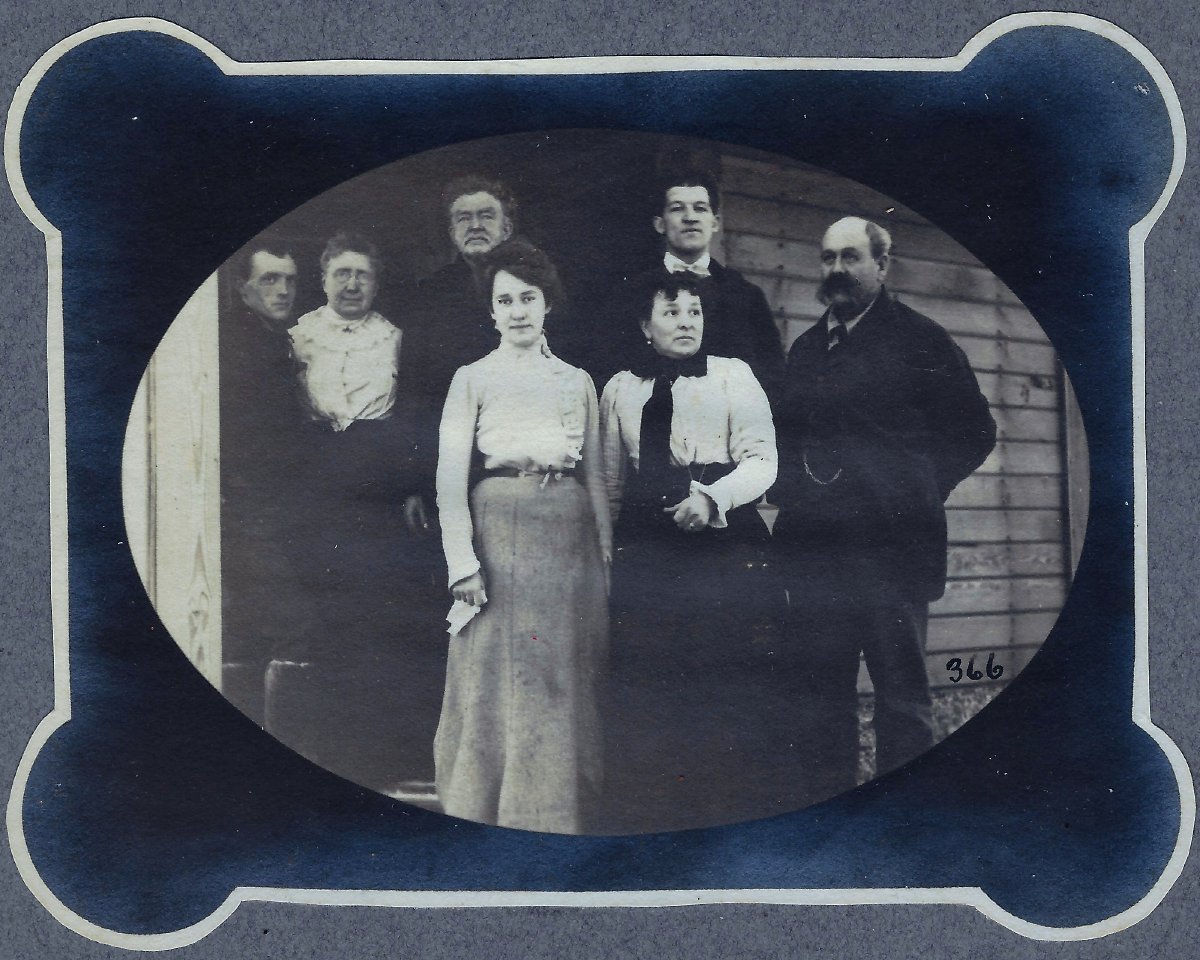
This 1901 photo captures a Thanksgiving Day group gathered at the home of William and Mary Jane Monroe in Nome, Alaska, where William - Monrovia's main founder - worked to build a railroad. Mary Jane and other family members joined him for several years. The photo comes from an album documenting the Monroe family's time in Alaska before their move to Monrovia. From the Monrovia Historical Museum collection. See full details here.
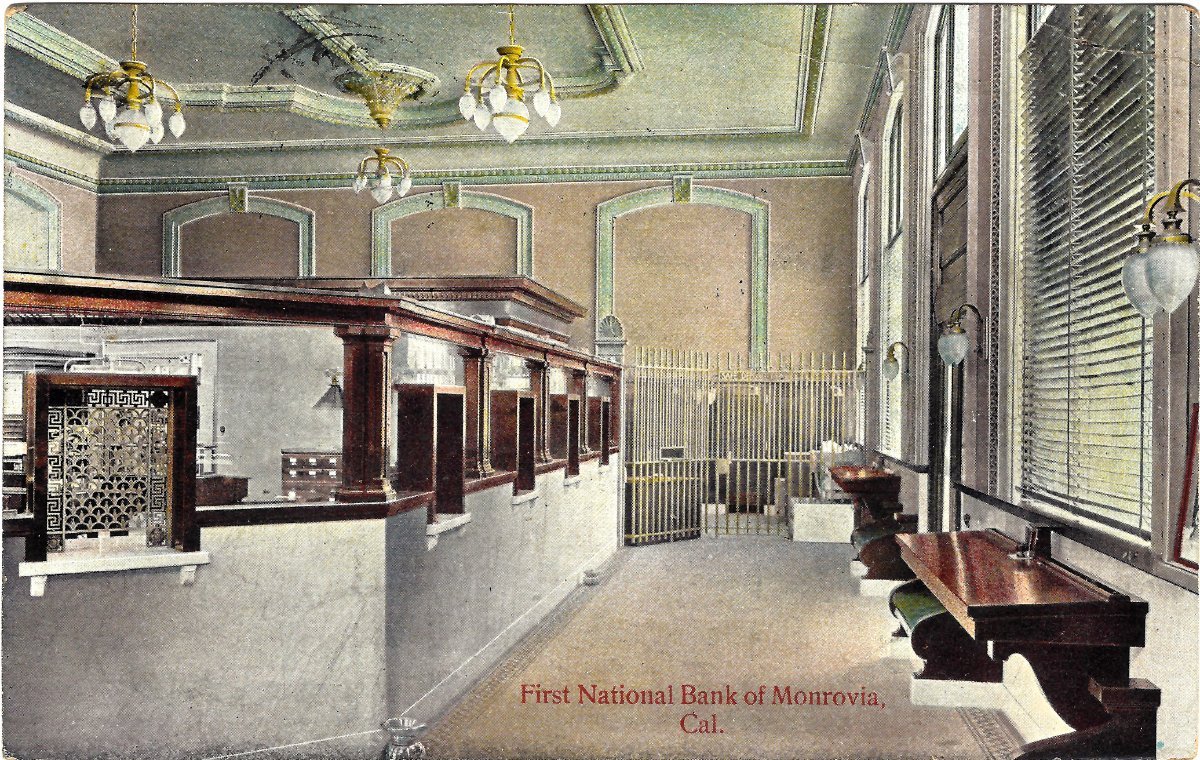
A Moment in Monrovia History: Inside the National Bank of Monrovia, 1910
This 1910 postcard shows the interior of the National Bank of Monrovia. It was mailed to a Mr. Willie Boyar of Los Angeles, postmarked August 13, 1910 from Monrovia, with a note from a sender named Lina. From the Steve Baker collection. See full details here.
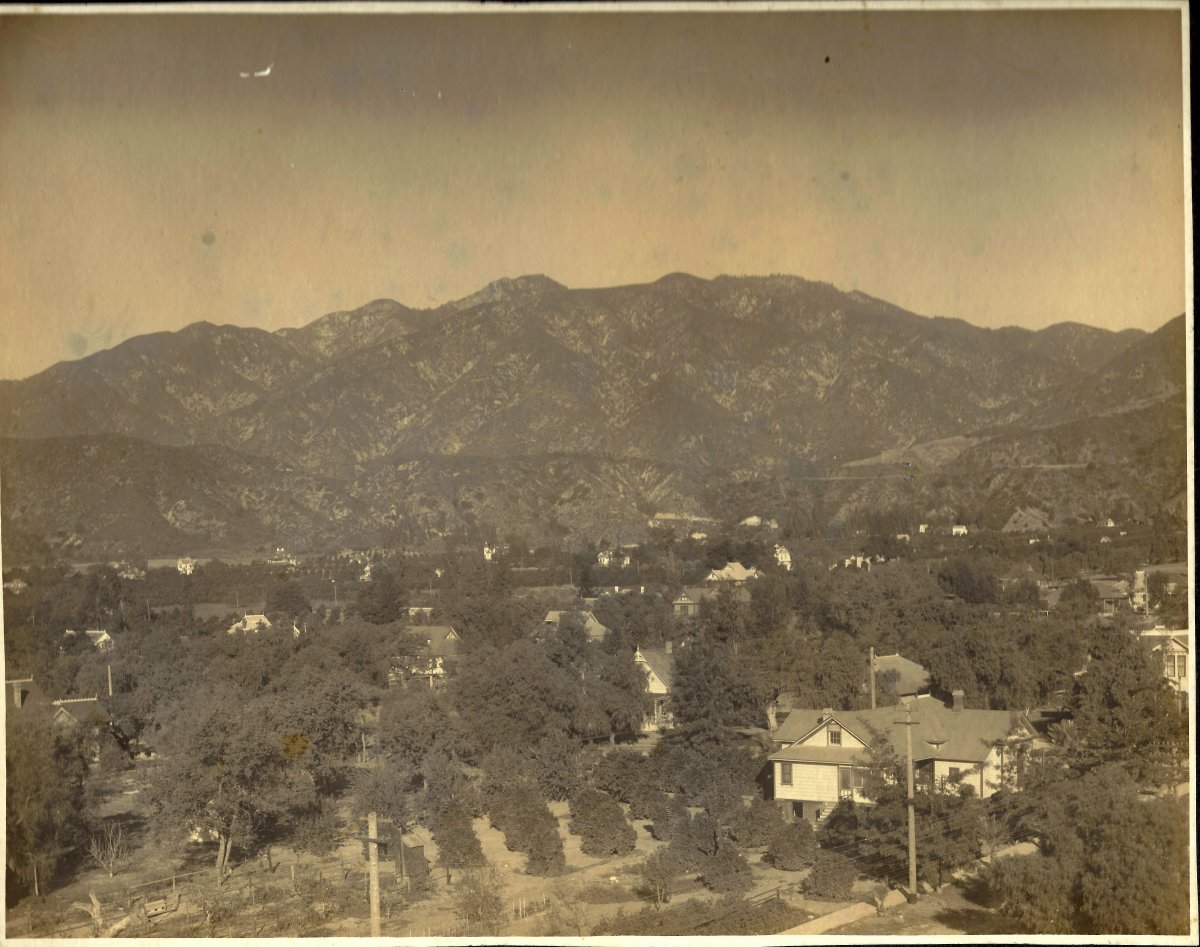
A Moment in Monrovia History: A Bird's-Eye View from the Southeast, c. 1903-1906
This view of Monrovia from the southeast, taken between 1903 and 1906, captures a number of the town's early homes, including the J.I. Case and Studebaker houses along Banana Avenue (now Hillcrest) and Mills View. The home in the foreground may be part of the Spence property on Myrtle Avenue, near an orange orchard shown on an 1904 map of the area. From the Myron Hotchkiss collection. See full details here.
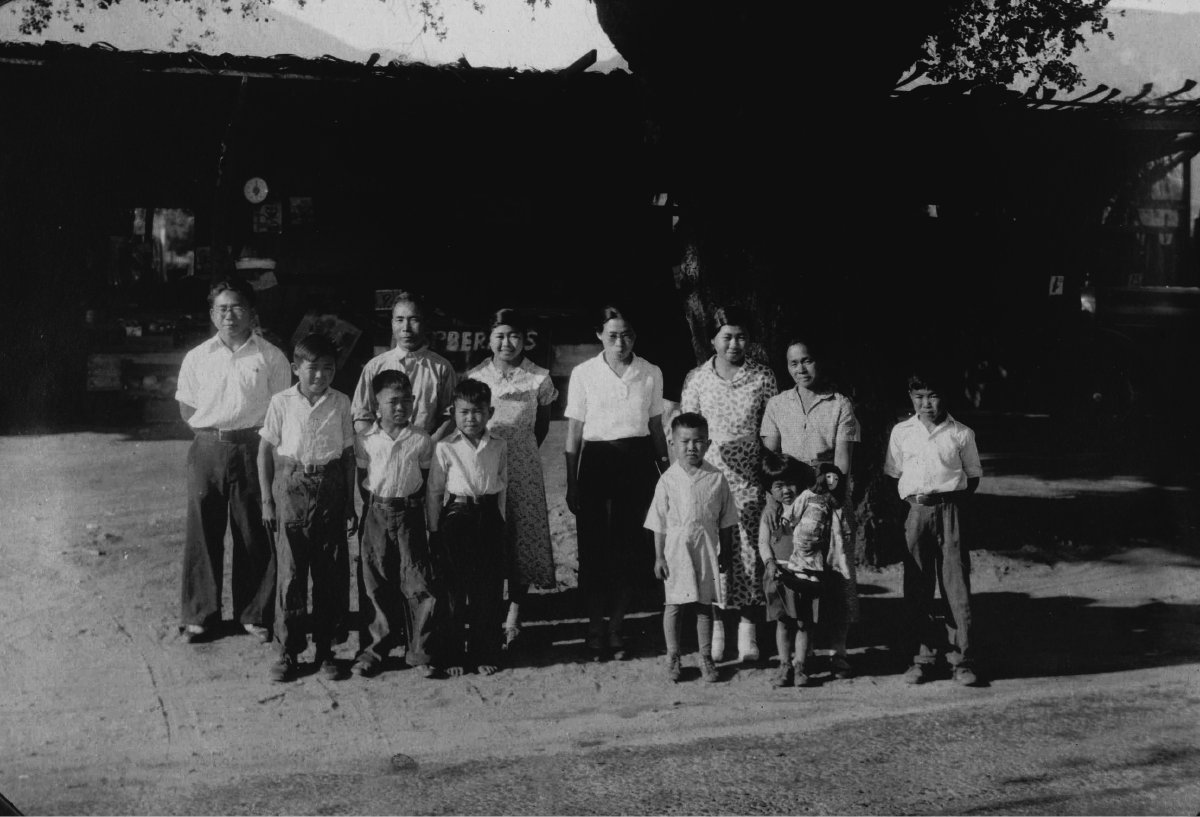
A Moment in Monrovia History: The Tsuneishi Family's Roadside Stand on Route 66
The large Tsuneishi family (after whom Monrovia's new Tsuneishi Park is named) at their roadside fruit stand along Huntington Drive, or Route 66. The eleven children pictured went on to remarkable lives - several served in World War II or the Korean War, two became pastors, one a bacteriologist, one a school teacher, and two ran the family's Tsuneishi Insurance business in Torrance, which continues today. From the Susie Ling collection. See full details here.
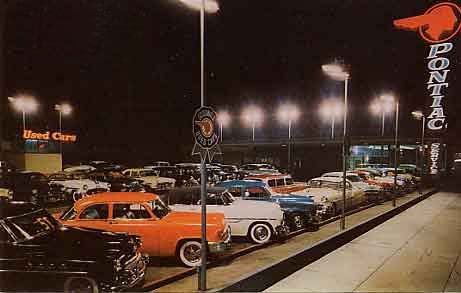
A Moment in Monrovia History: A Used Pontiac Car Dealership on Huntington Drive
This photo, from around 1960, shows a new and used Pontiac car dealership on Huntington Drive. From the Dick Singer collection. See full details here.
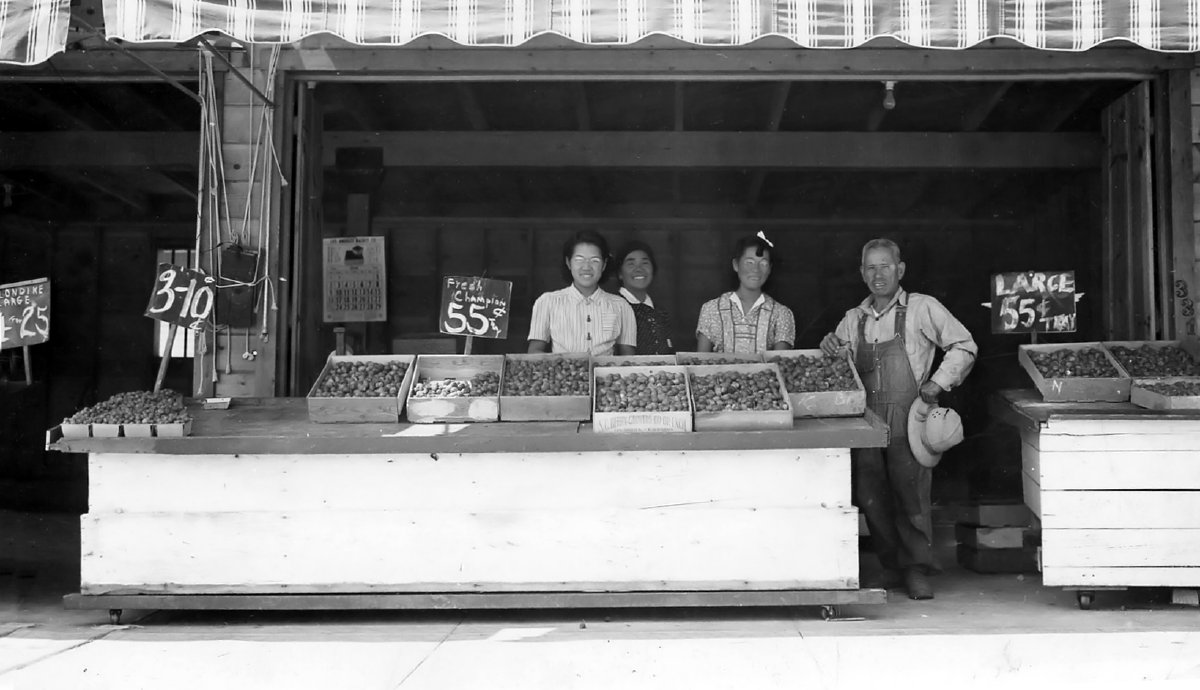
A Moment in Monrovia History: The Uyeda Family's Fruit Stand on Route 66
In 1939, the Uyeda family - Yoshiko, mother Naka, Mary and father Yutaro - sold flats of strawberries and other fruit at 331 W. Huntington Drive (just a bit west of Magnolia), along a stretch of Route 66 busy with traffic between Los Angeles and Riverside/Palm Springs. When the family was forced into internment during World War II, their friend Orman Good looked after their property. From the Susie Ling collection. See full details here.
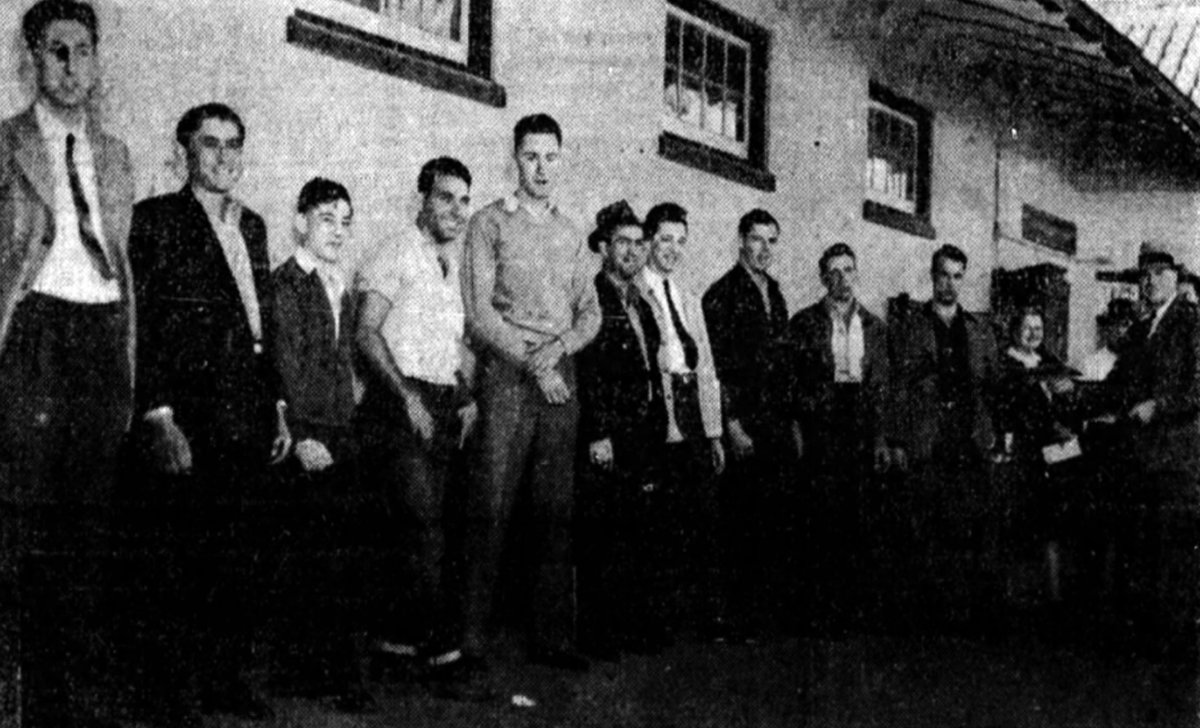
A Moment in Monrovia History: Just before WWII, draft call at the Red Car Depot
On November 7, 1941, ten Monrovia draftees — Carl Huber, Raymond Baes, Lawrence Mishima, Johnny Grippi, Jules Woehler, Clarence Nestell, Earl Morrow, Albert Walker, Max Bradbury and Robert Lieben — lined up for a newspaper photo in front of the Red Car depot at Myrtle and Olive Avenues, with draft board secretary James W. Hudson at the far right. The call-up came exactly one month before the attack on Pearl Harbor pulled the United States into World War II. From the Dick Singer collection. See full details here.
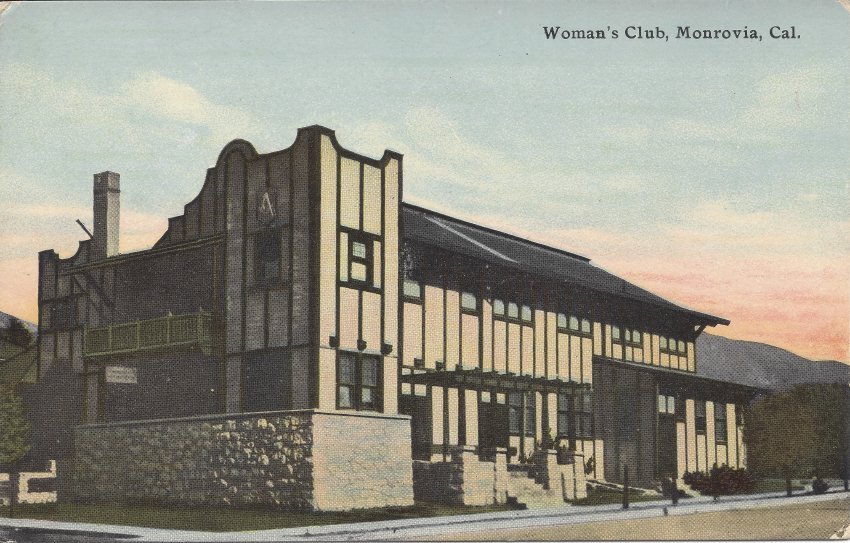
A Moment in Monrovia History: The Woman's Club House on Myrtle & Palm
This 1930 postcard shows the Woman's Club House, which once stood on the northeast corner of Myrtle and Palm Avenues, where the Bank of America is now. The back of the card carries a handwritten note to Hazel Bird about seeing the homes of Hollywood stars, postmarked 1930. From the Kim Anderson collection. See full details here.
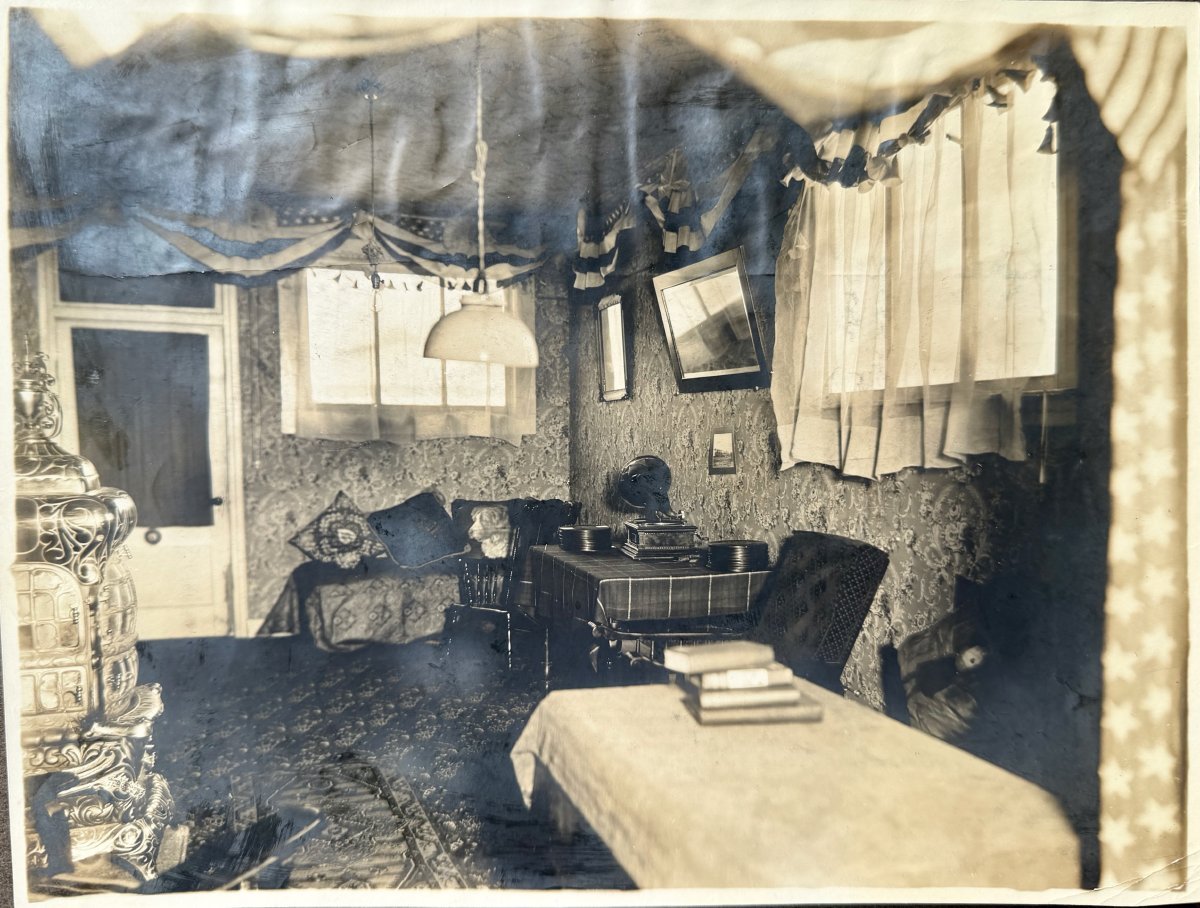
A Moment in Monrovia History: William Monroe's Home in faraway Nome, Alaska
This photo captures William Monroe's home in Nome, Alaska, featuring a phonograph and a fancy stove - furnishings that would later appear in the home of his daughter Mabelle Monroe Dyer and her husband Bruce Dyer. Monroe helped build a railway in Alaska. From the Monrovia Historical Museum collection. See full details here.
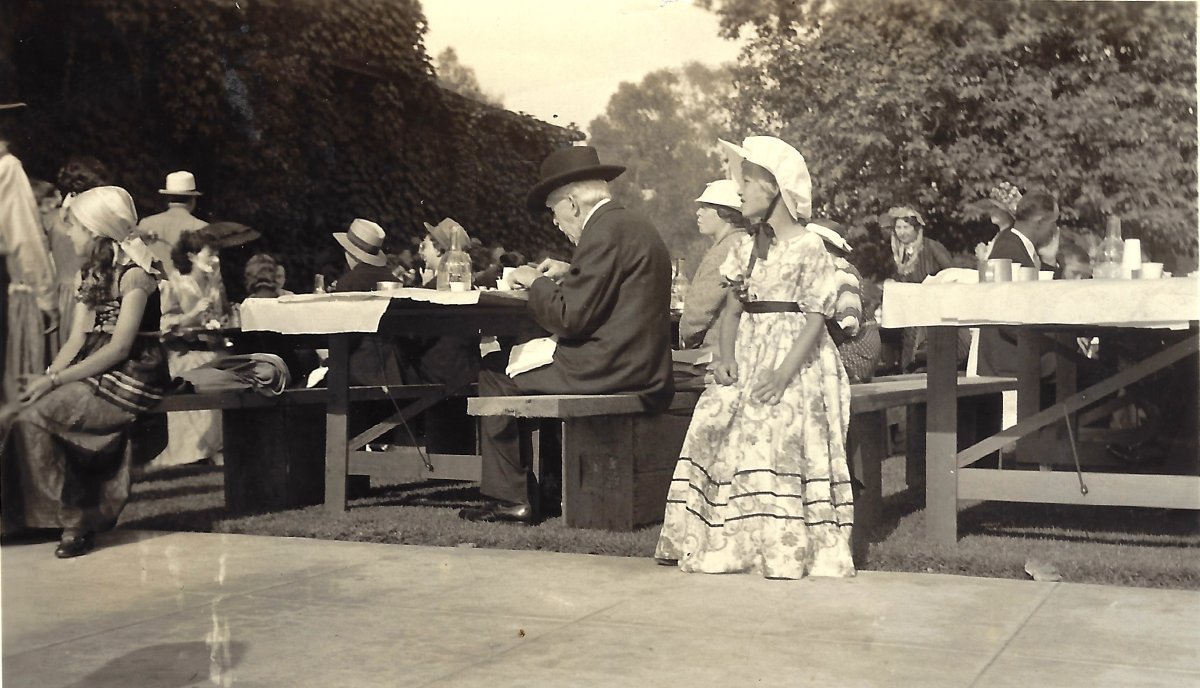
A Moment in Monrovia History: Lunchtime for Monrovia founder William Monroe
Monrovia founder William Newton Monroe having lunch at a Monrovia Days event, probably in the 1930s. From the Monroe collection. See full details here.
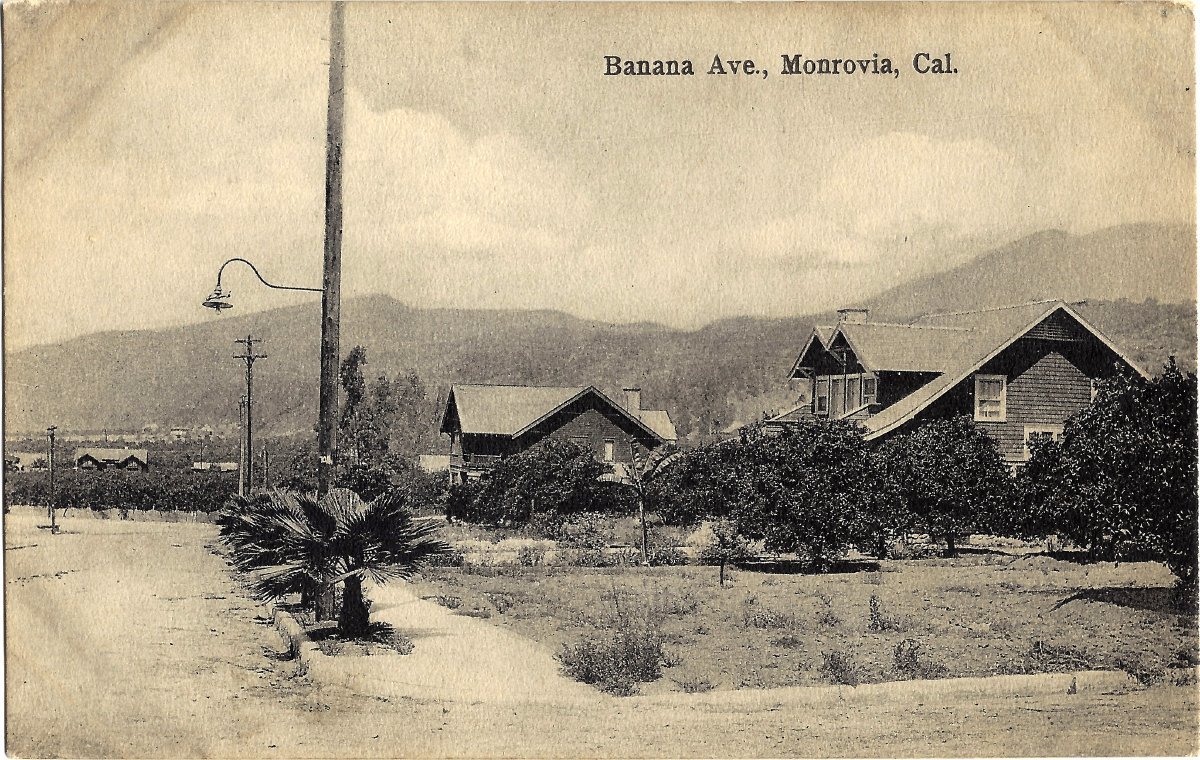
A Moment in Monrovia History: An early view along Banana Avenue
The view from Encinitas along Banana Avenue (now Hillcrest) looking west, from the early days of Monrovia. The home in the foreground is 115 E. Hillcrest and still exists. Banana Avenue was originally named to entice settlers looking for a tropical climate. From the Ella Long collection. See full details here.
A Moment in Monrovia History: Asa Casner's butcher shop around 1910
Asa Casner's Butcher Shop at 619 S. Myrtle Ave. around 1910. This is where Neighborhood Pawn is today. The use of a refrigerated display case was a novelty. (I like the ceiling fan, and I think the floor could use a little mopping.) From the Myron Hotchkiss collection. See full details here.
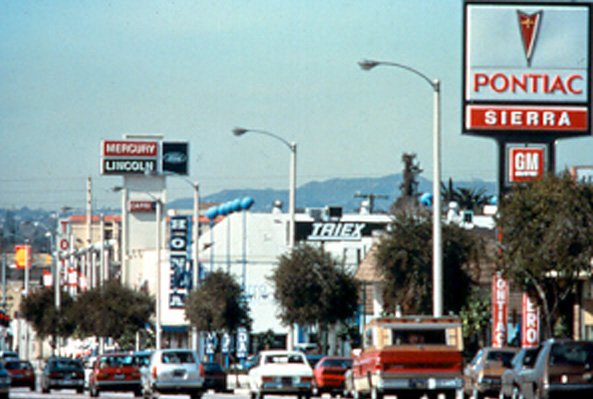
A Moment in Monrovia History: The auto dealerships of Huntington Drive
Auto dealerships lined Huntington Dr. in Monrovia through the 1980s, the last one leaving in 1991 for a freeway-adjacent auto mall created by the Monrovia Redevelopment Agency. From the Dick Singer collection. See full details here.
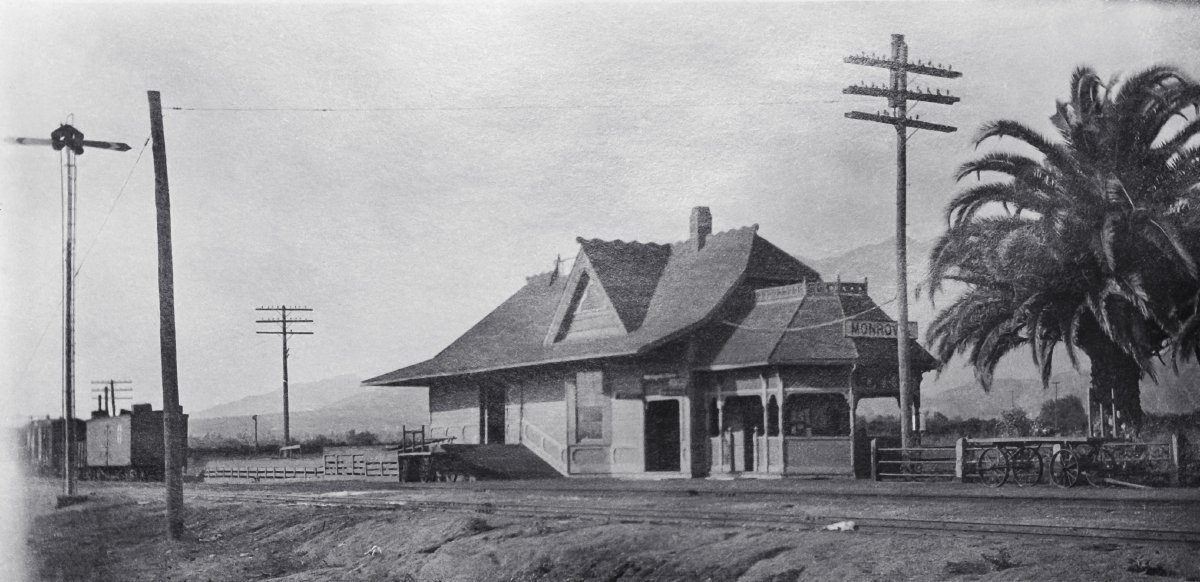
A Moment in Monrovia History: Our second railway depot
The Atchison, Topeka and Santa Fe Railway depot, the second railroad depot built in Monrovia. The first was very rudimentary. From the Myron Hotchkiss collection. See full details here.
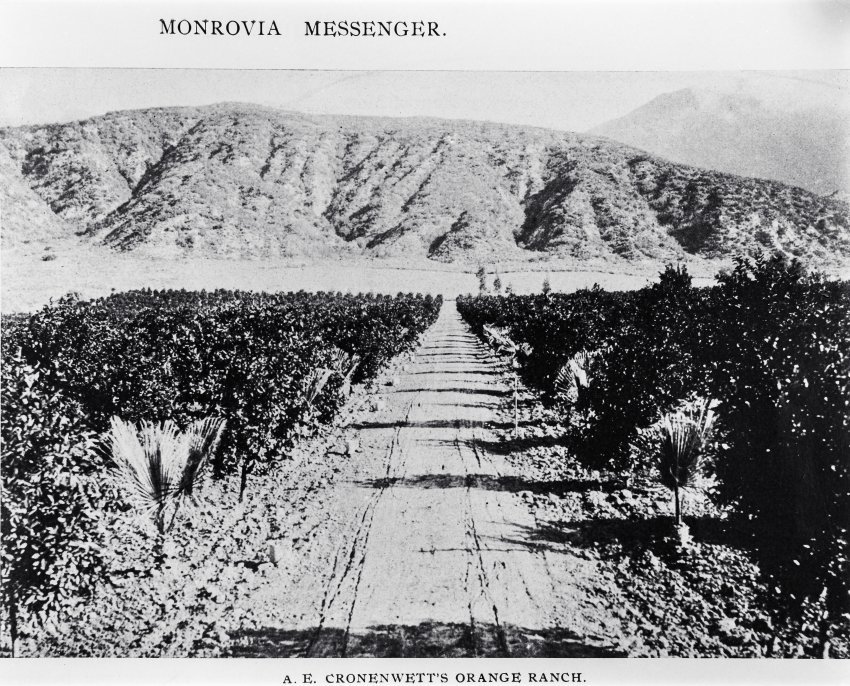
A Moment in Monrovia History: A.E. Cronenwett's Orange Ranch
A.E. Cronenwett's Orange Ranch around 1896. A photo looking north from White Oak (now Foothill) shows palm and orange trees about five or six years old. An 1897 Monrovia Messenger article said Cronenwett bought 20 acres on the western edge of town about five years earlier and planted orange groves, including Valencias. He later worked in the East as a traveling agent for Phillips’ California excursions and planned to return to Monrovia as his permanent home. From the Myron Hotchkiss collection. See full details here.
A Moment in Monrovia History: Almera Romney and her Huntington School class
Almera Romney and her Huntington Elementary fifth grade class in 1946. Romney was teacher and then principal at Huntington Elementary from 1946-1963. She fought for better conditions for the segregated school and advocated for integration. Standing next to Almera with a butterfly on her dress is Mimi Luvenia Martin (Mency, 1936-2011) who would be the first African American on the Monrovia school board in 1972. From the Susie Ling collection. See full details here.
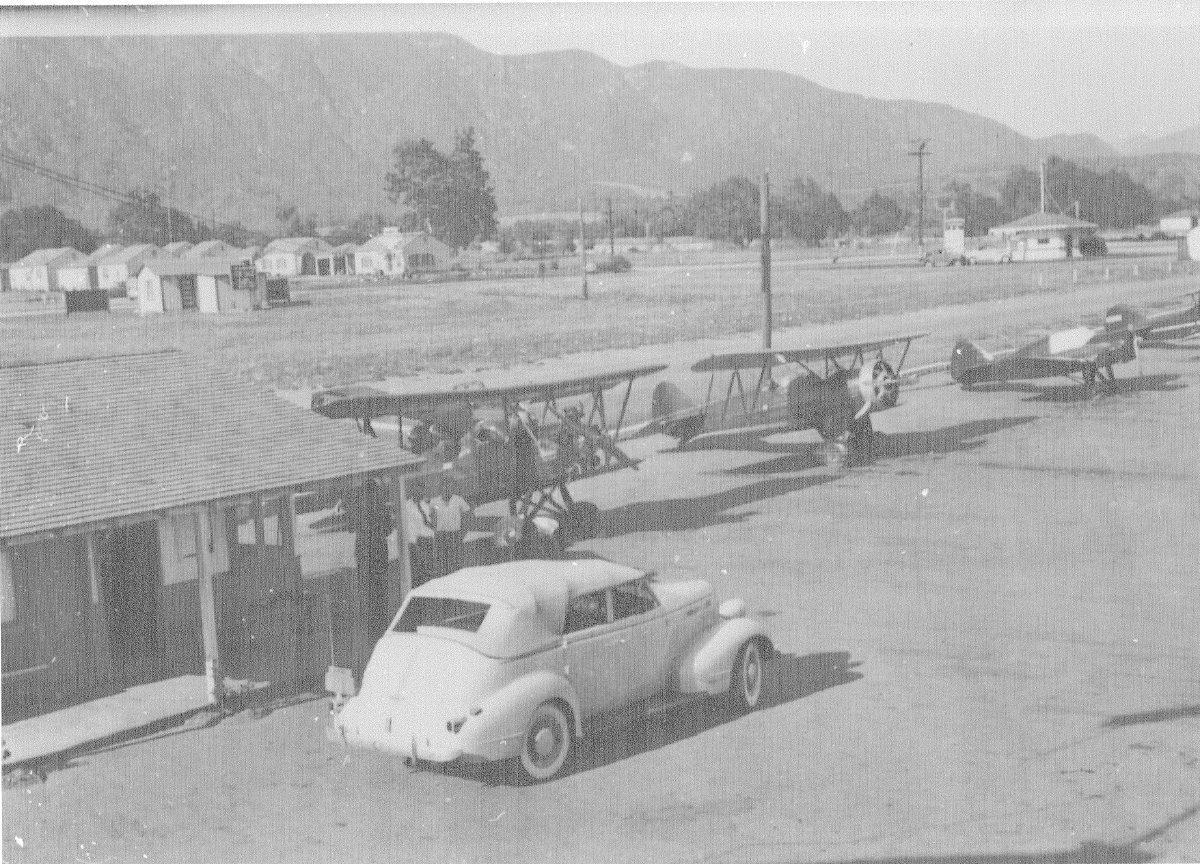
A Moment in Monrovia History: Where the McDonalds got their start
The Airdrome (top right corner of photo) at 742 E Huntington Drive was one of two original orange juice stands owned by Richard McDonald and his brother Maurice. It and the Giant Orange (a second stand at 721 E Huntington) were at the Monrovia Flying Field, which was roughly across the street from the current Aldi shopping center. Both were the first McDonald's! From the Gary Boen collection. See full details here.
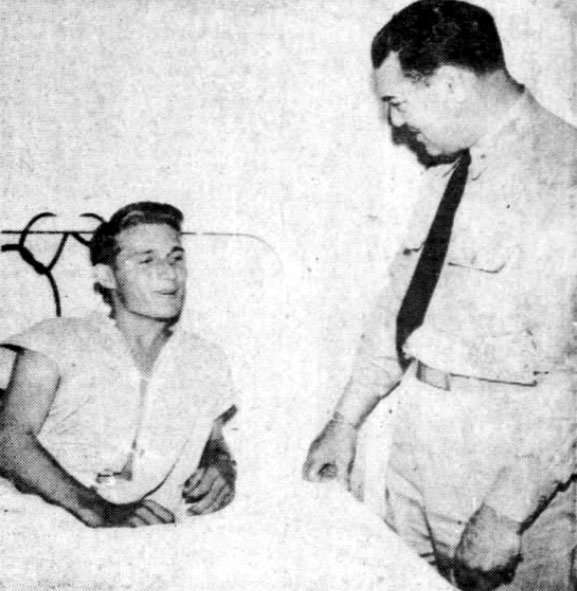
A Moment in Monrovia History: WWII fighter pilot visited by boxing champion
Monrovian Lt. David Wicks of 918 Crescent Drive, a P-38 pilot serving in the South Pacific during World War II, was hospitalized with malaria in 1945, and got a visit from Coast Guard Commander Jack Dempsey, the former heavyweight boxing champion. From the Dick Singer collection. See full details here.
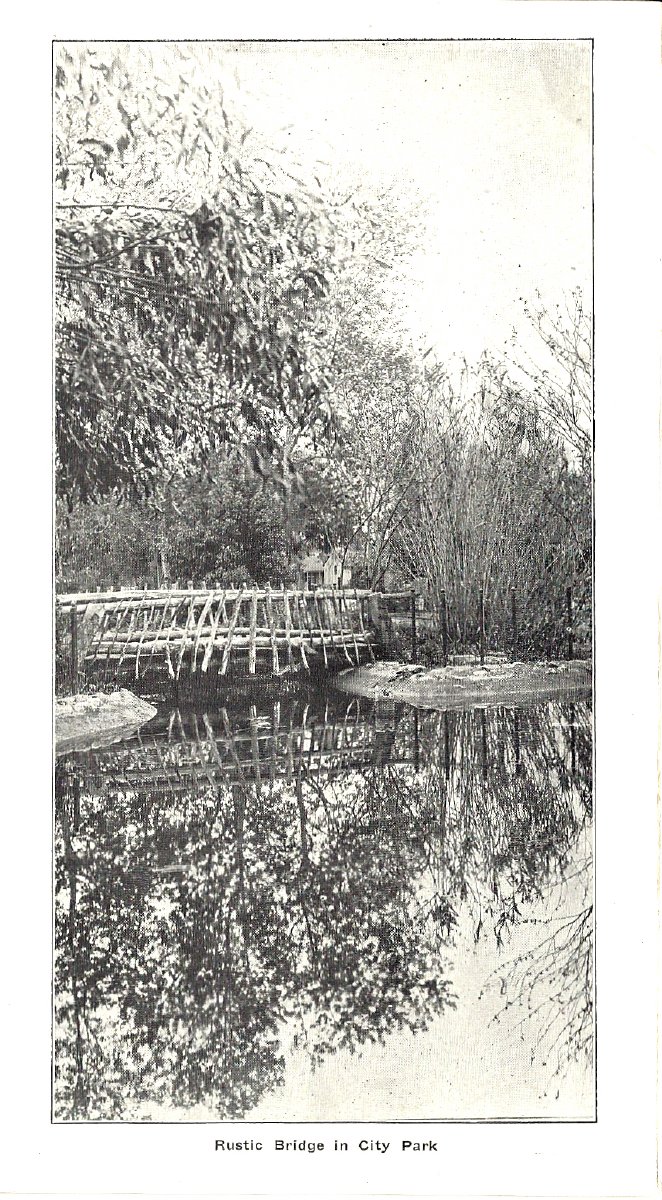
A Moment in Monrovia History: When Library Park had a bridge
A rustic bridge in City Park in 1912, a page from the 1912 Monrovia Board of Trade brochure - "Monrovia Illustrated." It was called City Park before it had a library on it. Now, of course, it is called Library Park. From the Ella Long collection. See full details here.
A Moment in Monrovia History: Possibly a patient at Pottenger tuberculosis sanatorium
Possibly a patient at the Pottenger Sanatorium, a tuberculosis treatment center located on North Canyon Boulevard in the hills of north Monrovia. More on the sanatorium here. From the Kim Anderson collection. See full details here.